Book Review: Parable of the Sower by Octavia Butler

The cover to Octavia Butler's "Parable of the Sower."

“Parable of the Sower” offers a frightening firsthand look at a slow-moving apocalypse. It seems scarily prescient in our uneasy times.

Our protagonist is Lauren, a teenage girl who lives with her family and neighbors in a walled-off block in far-suburban Los Angeles. Society outside is crumbling; it doesn’t rain anymore, and groups of gangs and desperate homeless people live violent lives out on the streets.

It’s not a full-on Mad Max dystopia. A fortunate few still have jobs, even if commuting back and forth to them is no longer a sure proposition now that even the relatively fortunate can’t afford gas–or travel without making themselves a target.

Still, Lauren and her neighbors manage to eke out a thin existence in their complex, growing crops and slaughtering rabbits. Things gradually grow worse as intruders come in to rob and murder, and Lauren’s clear-eyed preacher father begins to intensify the community watch and firearms training.

Lauren independently realizes that their way of life is coming to an end. She begins preparing to flee, and she also turns away from her religious background, building her own faith. Earthseed, as she calls it, reflects the dual beliefs that life is unceasing change and that humanity needs to find its ultimate destiny out among the stars.

Lauren eventually finds herself on the road with a small band, disparate people, unlikely apostles. They take a dangerous journey, one that leads to death and loss but also discovery. It’s moving and gripping, with a constant sense of peril driving the reader to plow through the pages.

Author Octavia Butler does a great job building her world, giving us a plausible apocalypse. She does a good job establishing her characters too, even if the community at the end seems to come together a bit too easily.

The largest issue I have with the book is the character of Lauren herself. She’s supposed to be a teenager, but she comes across as a full adult, with a patience and perspective that belies her years. She has been shaped by trauma–including a power/disability, the empathetic sharing of pain–but she becomes a leader too easily, gaining authority on the road that extends beyond anything she could have read in the survival manuals she stockpiled.

Lauren’s journey is compelling, but it would have felt more authentic to see her struggle more along the way. (The book also has a May-December romance that stretches plausibility as well as good taste). That said, “Parable of the Sower” is an excellent piece of apocalyptic fiction, harrowing and real.

Book Review: Glass Town: The Imaginary World of the Brontes by Isabel Greenberg

In her latest graphic novel, “Glass Town,” Isabel Greenberg offers a beautiful meditation on the Bronte family, comingling their upbringing with a fictional universe of their creation.

The last surviving sibling, Charlotte Bronte is our guide, introducing us to boarding schools and the windswept moors of Haworth, the family parish. Charlotte also introduces us to the imaginary worlds of Glass Town and Gondal, fictional settings populated by the siblings, filled with intrigue, rebellion and scandalous romance.

The story begins soon after the two oldest Bronte siblings have died after being exposed to the miseries of a Georgian boarding school. Traumatized, the four remaining siblings–Charlotte, Emily, Anne, and brother Bramwell–returned home and began creating their own fictional African kingdom. Originally populated by heroes and villains of the era, it is gradually overtaken by fresh characters: the caddish aristocrat, Zamorna, the black revolutionary, Quashia, and Quashia’s lover ( and Zamora’s wife), Mary Percy.

In Greenberg’s telling, Glass Town becomes a compulsion for the Bronte siblings, its tropical intrigues proving more alluring than the cold and poverty of Yorkshire. Even as the Brontes grow, and as Charlotte transitions to teaching at a newer, kinder, boarding school, they find themselves susceptible to bouts of “scribbelmania” centered on their fictional kingdom. Charlotte is the most grounded of the Bronte siblings, but even she has to grapple with whether Glass Town is more real–and more satisfying–than real life, especially for a woman in a time when a woman’s prospects were so constrained.

As “Glass Town” kicks off, Charlotte is visited by Charles Wellesley, a character of her own creation. He draws her back into the fictional world she’s left behind, and ultimately offers a choice: venture back or forsake it forever. Their conversations take us through the shared histories of Glass Town and the Bronte siblings, sharing their creativity and challenges.

Greenberg does a beautiful job capturing both words. Her characters are brilliant and prickly, often squabbling but deeply loyal to one another. Her art is evocative too, with thick, roughly sketched scenes and faces. There is something crude in her art, crayon-like and unpolished. Sometimes the effect can be rough, but in repetition the impact is deeply evocative, conveying emotion and a range of otherworldly settings.

In creating “Glass Town,” the author evokes the frayed boundaries between chilly boarding-school rooms and tropical villas, the surprising overlap between a set of poor, clever siblings and some of the greatest literature in the English language. It’s a meditation on creativity and compulsion, and in that regard it’s a beautiful success.

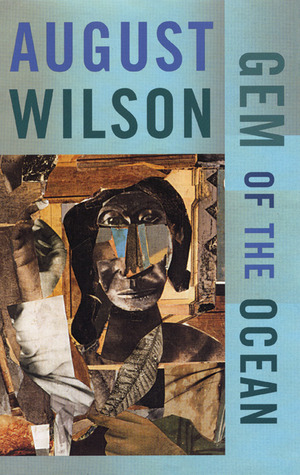
Book Review: “Gem of the Ocean” by August Wilson

Haunted, resigned, but stiffened with a fierce vein of resistance, August Wilson’s “Gem of the Ocean” is a short play but certainly not a small one.

All of the action takes place in the house of Aunt Esther. She’s a mystic and healer in a Black neighborhood in Pittsburgh sometime after the turn of the last century. It’s a racist place and a violent one too, particularly after a Black worker is accused of stealing a bucket of nails and drowns in the local river, refusing to leave the water while insisting he didn’t commit the crime.

There’s trouble in the aftermath of the drowning, but the frustration that pours forth is deeply rooted, stretching all the way back to slavery and its oppressive aftermath. As peddler Rutherford Selig shares, “They talking about keeping the colored out of Pennsylvania. Say, ‘What do we need them for?’ One man say they ought to send them back down South. I come on past the general store in Ranking and they was talking about, ‘Why can’t we have slavery again?’ One man said ’cause of the law. And somebody said change the law. The man asked him, ‘Would you fight another war?’ And he said, ‘Hell yeah.’ I was surprised when he said that but then I wasn’t too surprised.”

As the play reveals, slavery isn’t past, even in the new century. That’s literally embodied in the character of Aunt Esther, who recalls her tragic journey over the Atlantic and shares at one point that she’s nearly 300 years old. It’s also present in Solly Two Kings, a former Underground Railroad conductor who finds himself gearing up for one last trip to Alabama after his sister writes a letter saying that “the times are terrible here the most anybody remember since bondage.”

In a lean two acts, Wilson does a powerful job connecting past brutality to presents, both in the play’s timeline and in our own. Things have changed some in Pittsburgh; a Black man, Caesar Wilks, is the local constable, charging outrageous rents and shooting boys for stealing a loaf of bread. He gets to speak his mind in the play too. He’s hardened and complicit; but he’s had his own wounds, including a stint on the “county farm.”

Still, Caesar takes the trouble in town personally, knowing that whatever status he’s scraped out relies on his own willingness to enforce the norms of a cruel and racist society. In claiming his place, he’s assumed those same qualities. At one point he rants, “Want to blame me. You know whose fault it is. I’ll tell you whose fault it is. It’s Abraham Lincoln’s fault. He ain’t had no idea what he was doing. He didn’t know like I know. Some of these n***ers was better off in slavery. They don’t know how to act otherwise.”

“Gem of the Ocean” is stuffed with high emotion–protest, anger, guilt. This intensity is nicely balanced with a lively humor, though. There are moments where characters share a meal around a table and crack jokes. “Beans, beans, the musical fruit” even makes an appearance.

But while the humor adds a welcome lightness and humanity to the play, it can’t persist for long before it too is dragged under the weight of time and tragedy. The latter is still too fresh–and too often refreshed–to be set aside for long.

As Solly Two Kings sums up, “I used to be called Uncle Alfred back in slavery. I ran into one fellow called me Uncle Alfred. I told him say, ‘Uncle Alfred dead.’ He say, ‘I’m looking at you.’ I told him, ‘You looking at Two Kings. That’s David and Solomon.’ He must have had something in his ear cause all he heard is Solomon. He say, ‘I’m gonna call you Solly.’ The people been calling me Solly ever since. But my name is Two Kings. Some people call me Solomon and some people call me David. I answer to either one. I don’t know which one God gonna call me. If he call me Uncle Alfred then we got a big fight.”

Book Review: “Check, Please Book 1” by Ngozi Ukazu

A cute, cartoony, coming-of-age saga, “Check, Please” features Eric “Bitty” Bittle, a short, former figure skater who heads up to Massachusetts to play hockey at fictional Samwell University. Bitty’s good on the ice, but he didn’t grow up playing hockey, so he faints when faced with the contact that’s inherent to the sport. This leads to some early conflict with the team and its brooding captain, Jack Zimmerman. But it also offers an opportunity for growth, especially once Jack shows his kind side by taking the freshman player under his wing.

Bitty is gay and excited to express himself after growing up in a conservative southern town, where his father (who pointedly doesn’t make an appearance) was the tough high-school football coach. He eventually comes out to his teammates, who are supportive and welcoming.

Indeed, creator Ngozi Ukazu does an excellent job capturing the camaraderie of the squad. From practices to games to blow-out keggers at their hockey “haus,” the team is lively and fun. It’s easy to distinguish the characters, even if most of them have the good-natured “loving life” vibe that Bitty puts off.

Indeed, if I have a critique of the book, it would be that that it’s almost too pleasant. There’s conflict here and there, and Jack’s competitiveness and wounded backstory provide a nice contrast to Bitty’s constant cheer. But it can verge into cutesy in the same way that Scott Pilgrim or Ryan North’s “Squirrel Girl” series can. These are all books that I enjoy, but they presume a level of good will and “everything will work out if we just talk to one another” attitude that verges on utopian to my tastes.

Still, the cast for “Check, Please” is awfully cute, and Ukazu does a great job with the writing and the illustrations. Her characters are distinct, dynamic and capable of delivering a full range of emotions with just their faces and gestures. If you like cheerful coming-of-age stories, this a great comic to check out.

Book Review: “Paying the Land” by Joe Sacco

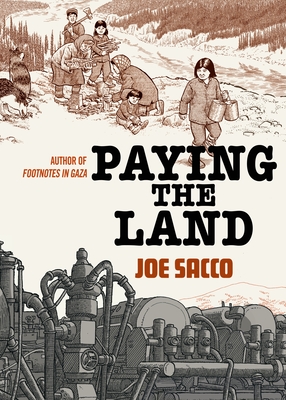
Cover of Joe Sacco's "Paying the Land"
In this fascinating, immaculately illustrated graphic novel, cartoonist Joe Sacco travels north to Canada’s Northwest Territories to spend time with the Dene people who are native to the region. He introduces us to a broad cast of characters who walk us through the region’s history, highlighting the difference between traditional and industrial ways of life.

“Paying the Land” spends time with snowmobiles and moose-skin boats, dog-sleds and salmon camps, winter roads and resource extraction. It also delves into politics, both the politics of exploitation that left the Dene people dispossessed as well as later movements that saw them working together (or at odds, in some cases) to reclaim their autonomy.

One of the book’s saddest topics is the Canadian government’s former policy of forcing Dene children into abusive residential schools that worked to eradicate their language, culture and family ties. Sacco’s interviews reveal how this policy, which affected many still living, continues to fracture families and communities today.

Sacco gives this trauma the space it deserves, exploring the alcoholism, abuse and suicides resulting from this devastation. At the same time, he also shares moments of joy and solidarity. A man shares his journey to sobriety and what it means to be a positive example for his son. A young adult reflects on the connection that a successful caribou hunt establishes with his ancestors. The book ends with a whole gymnasium playing the “hand game,” erupting into a kind of euphoria as one man beats the odds over and over again.

We remember these moments in part because Sacco is so successful in capturing the diversity of the people he meets up north. His interviews and his carefully rendered illustrations establish his characters as individuals–sometimes at odds with one another, but always memorable and distinct. It’s a great accomplishment.