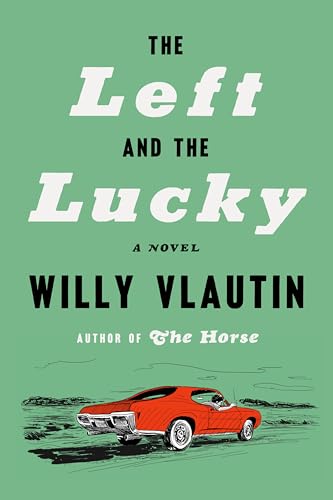
Blunt, beautiful and frequently heartbreaking, “The Left and the Lucky” transfixed me with its portrait of working-class dudes in Portland. Vlautin captures people I’ve known well but rarely see in fiction: people who work hard and either find their way to the right thing or crash hard against their own limitations.
Our focal point is Eddie, a house painter in his forties who runs his own crew and is doing all right for himself. Meticulous, responsible, Eddie likes a few beers after work but only after he washes up and cooks a good dinner. He’s kind and good hearted and surrounds himself with all kinds of characters, from Houston, his half-bum alcoholic assistant to Cordarrel, a blowhard from Chicago who used to be a player in the industry but whose big mouth sometimes speaks a hard truth.
One night Eddie notices Russell, a young neighbor, alone at night at the local grocery store. Eddie looks after him, ends up taking the kid under his wing. We get to know Russell’s family too, his struggling mother and violent, suffering teenage brother. And Vlautin does a neat trick here, because he doesn’t minimize the pain these individuals cause, but he also conveys their essential humanity.
It helps that we see them through Eddie’s eyes. Cool-headed (well, mostly) and non-judgmental, Eddie’s committed to stepping up and doing the right thing, even when it inconveniences him. That’s also a familiar type that I don’t see enough of in fiction. And sure, Eddie may go too far in letting the nuts around him walk over him, but he has his reasons, we learn. It’s a book of pain and revelations, but Vlautin maintains his faith in a fundamental decency, even when it’s not universally shared.
More than anything, “The Left and the Lucky” is a book of voice, conjuring up big characters and letting them ramble delightfully over the page. Whether it’s Houston deciding to get a perm to impress a waitress he has a crush on or Cordarrel lecturing that it was “the men in suits who invented lunch” we experience this world through character.
We get to know it through rough luck too, as Russell’s brother laments near the end. Early on, there’s a scene that might have turned out differently if Eddie were around, but he’s not, he can’t always be, not matter how hard he tries.
Quotes
“Old cars are like bad women, Eddie. I’m telling you. They’re fun at first, but they break down a lot and take your money little by little. For me it’s all right when it’s little by little, but always, eventually, they hit you with the big bill. But by then you’ve already put so much time and money into them it’s hard to quit. So you pay up and then it starts all over again.”
***
“The truth is, I could hold my liquor as good as any man in Chicago. And if you name me a town that drinks harder than Chicago, well, I’d be surprised. You might say some cities in Russia or Ukraine, maybe Poland or Finland, or maybe you’re thinking Ireland or Scotland. But here’s the thing you’re missing, Eddie: in Chicago we had the Russians and the Polacks and the Finns. We had the Micks and the Scots, too. And they all started fucking each other and having kids and they created a subset of super-drinkers. Men who can drink all night and still get up the next morning and get to the jobsite on time with a smile on their face.”
***
“I’m a fucking mess.”
“You sound like it,” he said. “For the twenty years we were together, you didn’t sound like this.”
“I didn’t?”
“No.”
“I feel like I’ve always been this way. Maybe it’s just been in there hiding and now it isn’t hiding. Maybe it’s me finally just being me.”