All posts by James

About James

James Seidler is a writer living in Chicago. The editor for the now-defunct humor publication FLYMF, he has now decided to maintain his web presence and smart remarks through this blog.

Favorite Books of 2025

I love seeing everyone’s year-end reading lists, and I was also fortunate to read some great books in 2025! Here are some of my favorites:
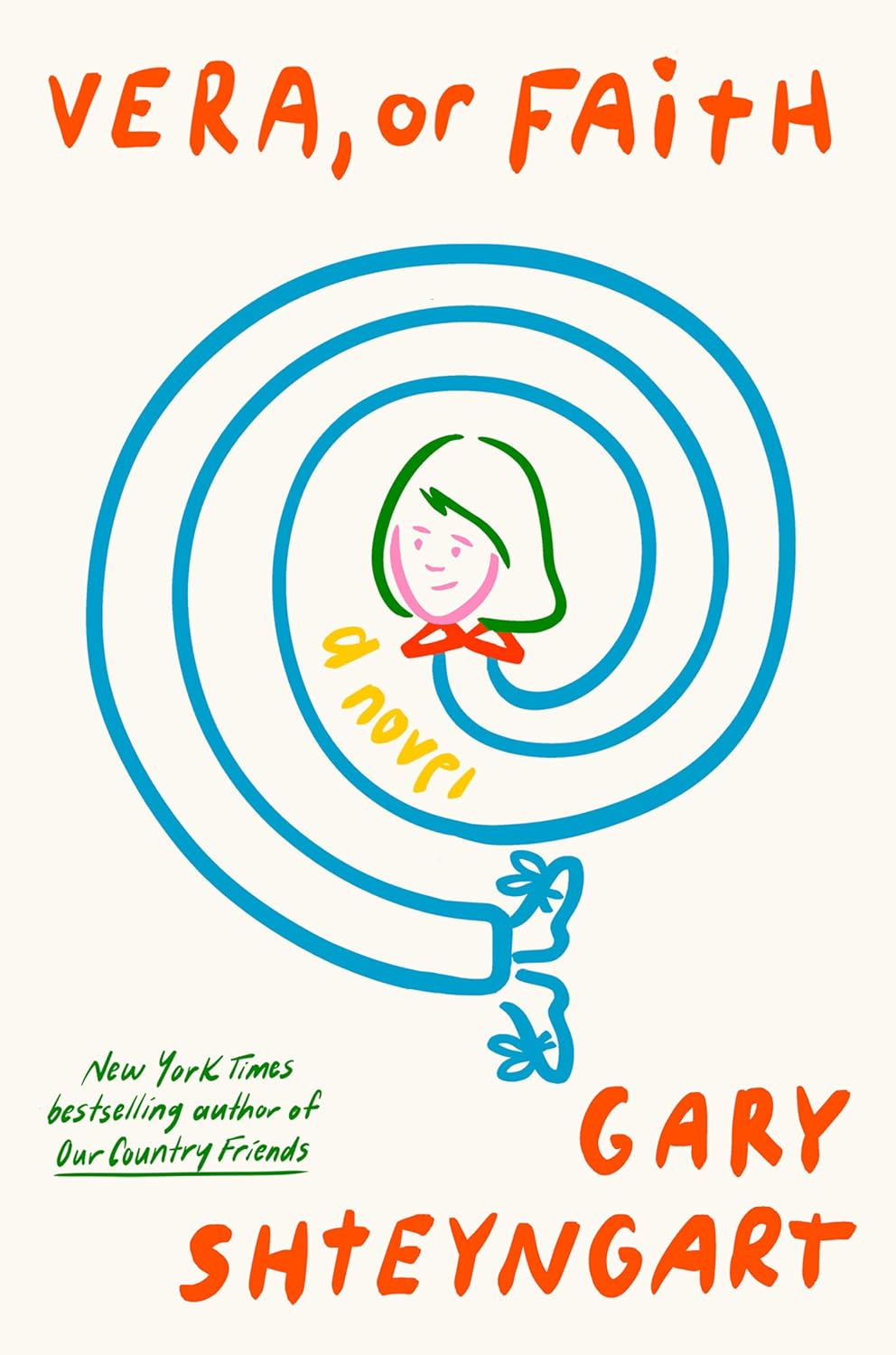
Book cover: Vera, or Faith by Gary Shteyngart, with an illustration of a girl's head warping to her feet in concentric circles.

“Vera, or Faith” by Gary Shtengyart

A near-future novel, this book nails the feeling of living in the present with humor and grace. Our title character is a precocious 10-year-old who’s struggling to figure out status and socializing while the world around her is low-key falling apart. An examination of family, politics, society and more, it’s short and nails the ending.
See My Full Review

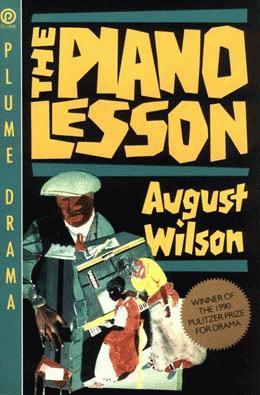
Book cover: The Piano Lesson by August Wilson. Includes outsider-art style painting of two people at a piano with a larger man in a suit looming overhead.

“The Piano Lesson” by August Wilson

A short play anchored in ghosts, it explores the difficult line between honoring our family pasts and casting them off to build better futures. The characters and dialogue are excellent, and it avoids settling into easy answers.
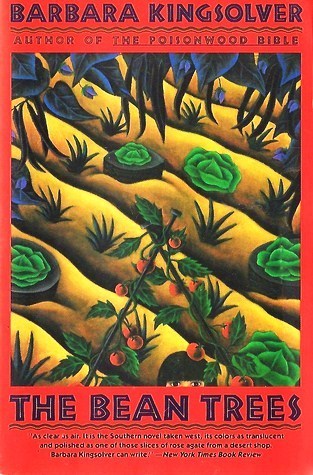
Cover: The Bean Trees by Barbara Kingsolver. Shows an illustration of crops growing in a field

“The Bean Trees” by Barbara Kingsolver

A beautiful early novel about a young woman who heads out west and picks up a foundling baby on the way. Settling in Tucson, Arizona, she discovers herself and a deeper understanding of family in the network she creates. Set in the 80s, the book engages topics we continue to grapple with today and is anchored with easy writing in a memorable voice.
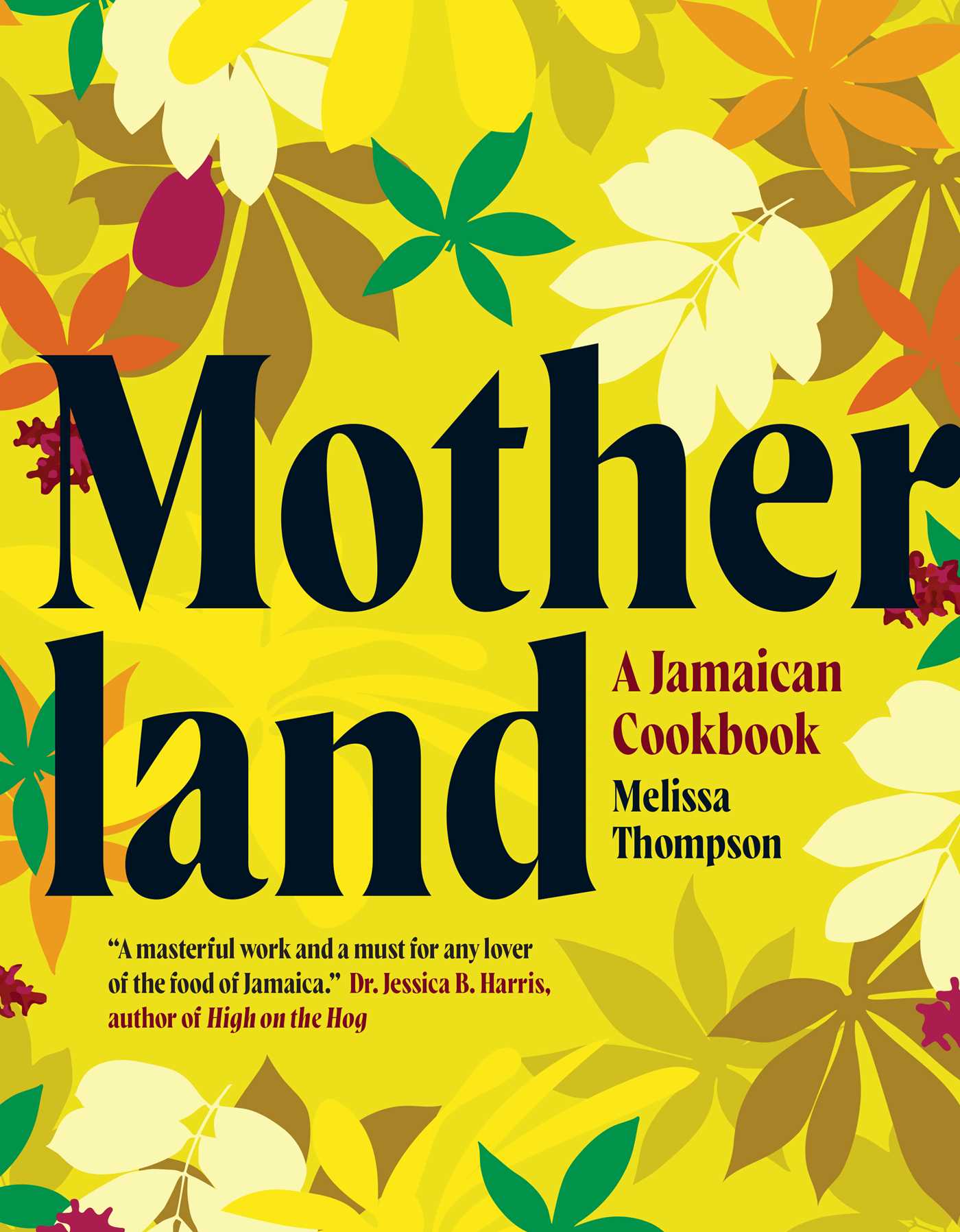
Cover: Motherland, a Jamaican Cookbook by Melissa Thompson. Features a cover of illustrated overlapping leaves.

“Motherland: A Jamaican Cookbook” by Melissa Thompson

I picked this up looking to expand my vegetarian palette and loved the blend of family stories and tasty recipes. The coco wheat buns are great, and I have enjoyed many a pigeon-pea stew here.
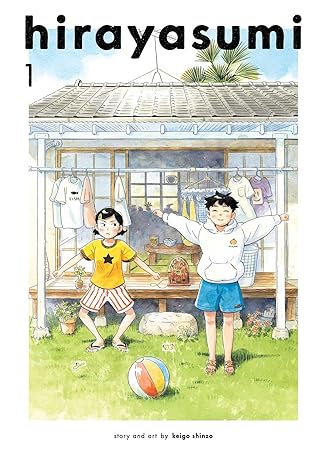
Cover Hirayasumi volume one by Keigo Shinzo. It shows an illustration of two young people doing calesthenics outside a Japanese-style house

“Hirayasumi” by Keigo Shinzo

This manga series set in Tokyo follows a 20-something slacker living with his art-student cousin. It’s warm and humane, with excellent art and gentle storytelling that reminds me of classic Archie Double Digests (but better).
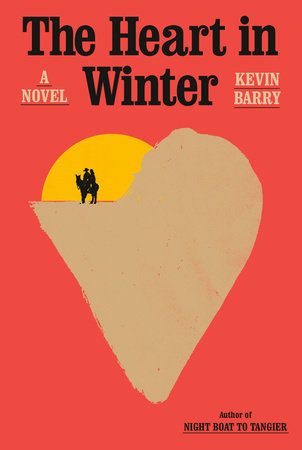
Cover of The Heart in Winter by Kevin Barry. We see a flat painting of a large heart, with the top left corner being taken up by a setting sun and a small illustration of a man and woman on horseback.

“The Heart in Winter” by Kevin Barry

Funny and vulgar, this Western-era novel introduces us to a star-crossed pair of Irish immigrants who fall hard for one another and end up trying to make a run from Montana to California. The characters and voice are memorable, even if Tom and Polly seem driven to self-destruction.
See My Full Review

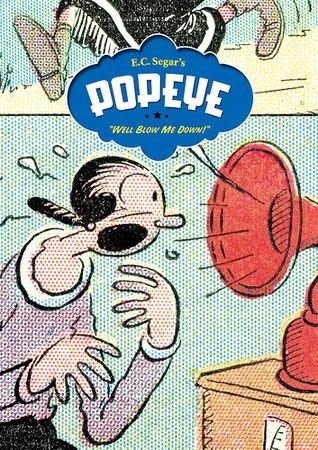
Cover: E.C. Segar's Popeye: Well Blow Me Down. Features an illustration of Olive Oyl being surprised by a blaring phonograph

“Popeye” by E.C. Segar

This classic comic-strip collection is bustling with life, as Popeye trades punches and malapropisms with anyone who crosses his path. Absurdly funny, it’s a wild read.
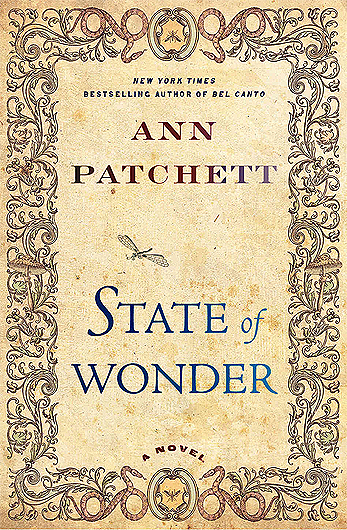
Book cover: Ann Patchett, State of WOnder. With an elaborate filigreed border and a dragonfly illustration.

“State of Wonder” by Ann Patchett

This novel finds a strait-laced researcher setting off into the Amazon rainforest in search of a presumed-dead colleague. It’s often contrived, but it’s also heartfelt and memorable.
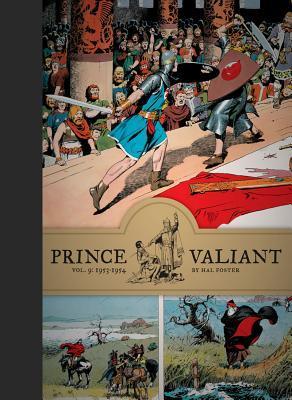
Cover: Prince Valiant Vol. 9, 1953-1954 by Hal Foster. We see Valiant fighting another knight in armor.

“Prince Valiant” by Hal Foster

Even 12 volumes in, this series continues to pair exquisite art with lively action and knowing dialogue. It’s nowhere near as square as Val’s haircut makes it look.

Book Review: “Vera, or Faith” by Gary Shteyngart

The cover of Gary Shteyngart's "Vera, or Faith," showing a simple illustration of a girl rendered in colorful circular lines.

Funny and heartbreaking, “Vera, or Faith,” continues author Gary Shtenyngart’s streak of reflecting our present into an unsettling near future.

Set in New York not too far down the line, this book centers on the precocious 10-year-old in the title. Vera is smart but struggling with social cues and a high-stress home life.

Her dad, Igor (a sort-of Shtenyngart stand-in) is immature, drinks too much and is fixated on selling the magazine he runs to a “Rhodesian billionaire.” Igor’s marriage with Vera’s step-mom, Anne, is rocky. A “trad wife,” as Igor claims, Anne is struggling trying to keep the household running: she has to care for Vera, a son with Igor, and her husband too. She comes off as well-meaning but perpetually frazzled as she tries to keep Igor in line and encourage Vera to recognize status and social cues.

On top of her family drama, Vera is tasked with a big debate project at school, and she’s also preoccupied with intimations that her real mom, who she doesn’t know, might be sick. Society seems sick too, and it’s here that Shteyngart is so skillful with the near-dystopian details.

There are protests in the streets. Women traveling through red states are subject to pregnancy tracking at “Cycle Through” stations. Much of the political debate, though, centers on a proposed “five-thirds” amendment, which aims to give five-thirds of a vote to (white) Americans who can trace their ancestry to the Revolutionary War era. It’s a world of oligarchs and bad-faith political debate and a familiar sense of everything falling apart in the stupidest way possible.

Through it all, Vera is our anchor. Smart, energetic and unfiltered, she’s poised beyond her years but is still just a kid, even given the seismic issues at home and in the world beyond. It would be easy to render her a phony little super genius, but Shteyngart’s take is compulsively readable.

“Vera, or Faith” is a brief, brisk book, full of reversals and twists. AI devices play a big role, but the book steps away from tropes here too, establishing the technology as ubiquitous and flawed, just another dumb thing we all have to learn how to live with. His characters are the same, following their own interior logic as the book builds to an impeccable ending, one that makes a clear statement on who, exactly, qualifies as American.

Book Review: The Heart in Winter by Kevin Barry

Cover: the Heart in Winter, a novel, Kevin Barry. Illustration shows a rough tan heart, with a couple on horseback in a setting sun in a cutaway at the top left.

A tale of love and binges and bounty hunters, “The Heart in Winter” is like a Cormac McCarthy novel delivered by the poet the next barstool over. 

Set in Montana mining territory in 1891, Kevin Barry’s book introduces us to Tom and Polly, two Irish immigrants who can’t say no to trouble, or each other. Seeing that Polly is a newlywed mail-order bride for a lieutenant in the mining company, this soon sees the pair on the run in the Montana wilderness, setting off with a half-assed plan to make it to California.

This journey blends humor and peril as the lovers amble on their way, mostly oblivious to the danger coming after them. Tom and Polly are likeable but also given to taking the day as it comes, without much foresight. And so they trade songs with French furriers and indulge themselves with magic mushrooms and well-stocked trapper’s cabins. You want to shout at them to hurry, to be serious, but that’s not in their nature…until circumstances oblige them to be. 

While Tom and Polly are good for a line and a laugh, they’re obviously shaped by the traumas of famine-era Ireland, old wounds that Barry mostly leaves hinted at. They’re memorable characters, and it’s wrenching to worry whether their fool’s luck can hold up.

A note if you’re starting the book and finding yourself turned off by the stream-of-consciousness binge in the first chapter: things pick up once Polly appears, so I’d give it a little more time if you’re considering quitting.

Quotes

“The deathhauntedness of the Irish brethren was frequently a complication in the working life of Sheriff Stephen Devane. Soaked in an ambience of death from the cradle, they believed themselves generally to be on the way out, and sooner rather than later, and thus could be inclined to put aside the niceties of the living realm.”

***

“Was this Jed character interferin with you, Polly?”

“So what? So now you’re jealous-minded on an old Scotch that’s dead and gone the best part of twenty years?”

“It’s the way my head turns. I’m sorry about it. It’s a sickness that I have.”

“Okay.”

“I mean try livin this bullshit from the inside out, Poll.”

***

“She lay in the darkness and sermonised against herself. If you are of the kind that throws yourself to the fates of the earth then you better watch out. If you are of the kind that takes notions in a life then you just got to accept all of that life’s capricious outcomes. If you are of the kind that throws all cares to the wind don’t go complainin when suddenly you are off your goddamn feet and spinning out forever in the crazy fucking wind. Now I have no longer the agency of my own affairs, Jesus, and that is a goddamn fact.”

Short Story, “Are You Feeling Brave?” in Cleaver Magazine

Illustration of a needle stitching up a wound with the text: "Are You Feeling Brave? by James Seidler

Very excited to have a short story, “Are You Feeling Brave?,” published in the latest issue of Cleaver Magazine. It’s about a broke kid trying to tough his way through a situation that’s bigger than he should have to deal with.

Read the Story

The story’s an excerpt from my first novel, “Classmates.” That book’s not perfect, but I still think it has a worthwhile perspective on trying to hurdle the gap between free lunch and a stable career, whatever that means these days.

Book Review: “Transcendent Kingdom” by Yaa Gyasi

Book cover: Transcendent Kingdom by Yaa Gyasi. An illustration shows a girl with her arms raised in prayer.

Beautiful and deeply realized, Yaa Gyasi’s “Transcendent Kingdom” captures the experience of growing up shaped by trauma–including the shame of trying to hide your own pain.

The novel’s main character is Gifty, the daughter of Ghanian immigrants, raised in Alabama. As the novel begins, Gifty is a Ph.D. student in neuroscience in Stanford–heady stuff. But the news that her mother, mired in a deep depression, is coming to stay with her inspires the type of panic that testifies to a raw relationship, the kind rooted in painful memories and unfinished business.

Gradually, Gifty reveals the walls she’s built up to protect herself from a difficult childhood. Her father abandoned the family when she was young to build a new life back in Ghana. Her loving older brother fell into opiate addiction, with all the chaos and worry that entails, before dying of an overdose. Her mother, harsh at the best of the times, crawled away to bed after her son’s funeral, even attempting suicide. And Gifty, still a child, was stuck trying to deal with it all herself, dealt the loser’s hand of trying to trying to keep everything together when everyone else is falling apart.

Gifty’s family is deeply evangelical, a fact that only intensifies the pressure placed upon her. While she takes some pleasure in the faith of her childhood, she loses it, irredeemably, when her brother dies. But her church remains a community, for her mother in particular, and as Gifty leaves home for bigger opportunities, she also struggles with the worldly classmates who judge her faith…just as she feels they would judge her if they knew everything.

As Gifty juggles her mother’s arrival with the pressure of finishing her Ph.D., she’s really dealing with the larger task of exploring how to stop hiding who she is. Gyasi does an excellent job building a character who’s brilliant and tough and driven but also deeply damaged, with a need to keep others at a distance. It’s a compelling portrait of what it’s like to be an “adult child,” and it uses sure, elegant prose to let us into Gifty’s interior life without stranding us there.

“Transcendent Kingdom” isn’t perfect. There’s a contentious, intimate-verging-unt0-romantice relationship with another student at Harvard that the novel doesn’t seem quite to know what to do with. The book also ends with a jump ahead in time that felt a little too easy for me. Nonetheless, I found it a great read, particularly with anyone who’s seen the impact addiction has on families.

Quotes

“I had never been to therapy myself, and when the time came for me to choose what to study, I didn’t choose psychology. I chose molecular biology. I think when people heard about my brother they assumed that I had gone into neuroscience out of a sense of duty to him, but the truth is I’d started this work not because I wanted to help people but because it seemed like the hardest thing you could do, and I wanted to do the hardest thing. I wanted to flay any mental weakness off my body like fascia from muscle. Throughout high school, I never touched a drop of alcohol because I lived in fear that addiction was like a man in a dark trench coat, waiting for me to get off the well-lit sidewalk and step into an alley. I had seen the alley. I had watched Nana walk into the alley and I had watched my mother go in after him, and I was so angry at them for not being strong enough to stay in the light. And so I did the hard thing.”

***

“I loved Alabama in the evenings, when everything got still and lazy and beautiful, when the sky felt full, fat with bugs.”

***

“She paid for the chips and my sandwich as well, and we headed over to the high-tops at the far end of the shop. It was almost empty save a few undergrads who had made their way over to this graduate student part of campus, probably for the quiet, the decreased chance of recognition. I’d once been like that, so lonely that I craved further loneliness. Even after I’d made a few friends in college, I would still go out of my way to create whatever conditions I needed that might allow me to be alone.”

***

“I didn’t mind that the library was neither cool nor hip. I liked Mrs. Greer with her soda addiction and her dedication to the eighties perm. In fact, if there was anyone at school that year who would have honestly cared about my problems at home, who would have listened to my worries and found a way to help, it would have been Mrs. Greer.

‘I’m fine,’ I told her, and as soon as the lie left my lips I knew that I was going to take care of my mother myself. I was going to nurse her back to health through the sheer force of my eleven-year-old will. I would not lose her.”